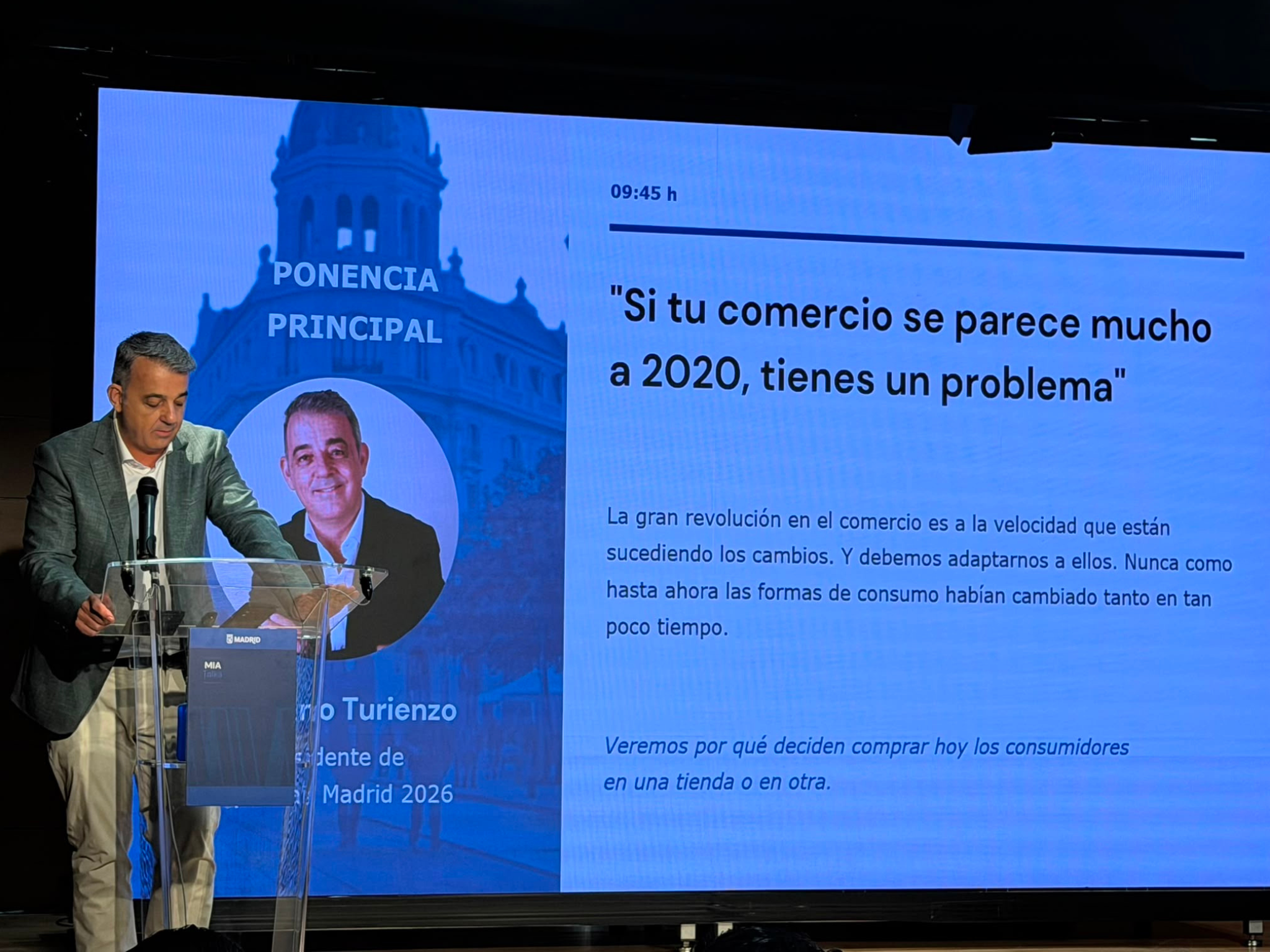
Last Friday, Madrid Investment Attraction held a new edition of MIA Talks under the title “Cities with Soul: The Future of Local Retail in the Omnichannel Era”. The event brought together experts, business leaders and institutional representatives to discuss the challenges and opportunities facing urban retail in a context shaped by digital transformation and changing consumer habits.
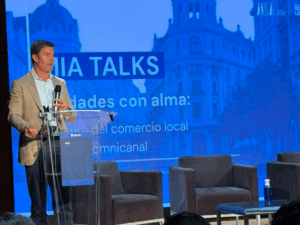
The event began with an institutional opening by Óscar Romera Jiménez, General Coordinator for Economy at Madrid City Council, who reaffirmed the municipal administration’s commitment to strengthening Madrid’s retail sector as an economic, social and community-building force across the city’s neighbourhoods.
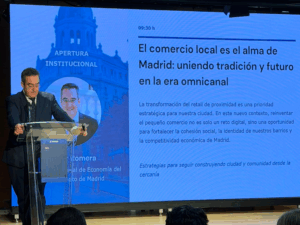
The keynote address was delivered by Laureano Turienzo, President of the Spanish Retail Association and one of the sector’s most influential voices internationally.
During his presentation, Turienzo shared a strategic perspective on the evolution of retail in the coming years, shaped by one clear premise: the pace of change has accelerated to unprecedented levels, and businesses must adapt in order to remain competitive.
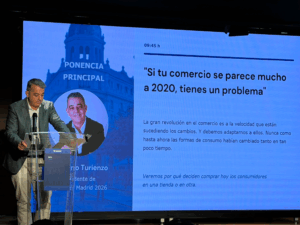
“Digitalisation is no longer negotiable,” stated the expert, who warned of the risks of maintaining business models rooted in the past. In this regard, he shared a reflection that resonated with attendees: “If your retail business looks too much like it did in 2020, you have a problem.”
Laureano structured his analysis around five major trends transforming the retail sector:
The expert highlighted how technological advances and changing consumer behaviour are redefining the sector at an increasingly rapid pace. Adapting is no longer a competitive advantage, but a necessary condition for survival.
Retail is evolving from mass offers towards fully personalised experiences. Through data analysis and new technologies, businesses can better understand their customers and provide solutions tailored to their individual needs.
Turienzo noted that artificial intelligence is driving a transformation comparable to the major technological revolutions of recent history. Its ability to optimise processes, anticipate behaviour and improve customer experience will make the difference between leading businesses and those that fall behind.
The boundary between the physical and digital worlds has disappeared. Consumers constantly move between both environments and expect seamless, consistent and connected experiences. In this context, physical stores continue to play an essential role within omnichannel strategies.
In an increasingly digitalised society, Turienzo argued that the true disruptive factor will be precisely what technology cannot replicate: proximity, personalised service, trust and an emotional connection with customers.
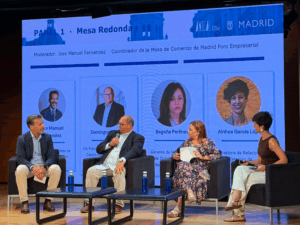
Following the keynote address, the event continued with a first panel discussion focused on urban strategy and the role of local retail in building more dynamic and cohesive cities.
Moderated by José Manuel Fernández, Coordinator of the Retail Committee at Madrid Foro Empresarial, the panel featured Domingos Esteves, Co-founder of FWD Advisors; Begoña Perlines Benito, Manager of the Barrio de las Letras Merchants’ Association; and Ainhoa García López, Director of External Relations at Mercamadrid.
Participants discussed the challenges faced by urban environments in preserving competitive, sustainable local retail connected to the changing needs of consumers.
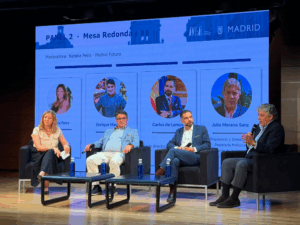
The second panel, moderated by Natalia Peiro, Managing Director of Madrid Futuro, brought the discussion into the business sphere through real examples of transformation and adaptation.
The panel included Enrique Martínez, CEO of Vallekas Encurte; Carlos de Lemus, Managing Partner of Bombonería La Pajarita; and Julio Moreno Sanz, Owner and Director of Pastelería Mallorca. They shared practical cases related to innovation, differentiation, customer loyalty and the evolution of businesses with a strong local identity.
The different contributions reached the same conclusion: the future of retail lies in strategically integrating technology without losing the essence that makes local commerce an essential part of city life.
Innovation, artificial intelligence and omnichannel strategies will continue to transform the sector. However, factors such as proximity, trust and customer experience will remain decisive in creating value and building long-lasting relationships with consumers.
With this new edition of MIA Talks, Madrid Investment Attraction reaffirms its commitment to creating spaces for dialogue and collaboration that contribute to Madrid’s economic development and strengthen its business ecosystem.